In communities across eastern Democratic Republic of Congo, protecting lives begins long before an outbreak occurs. Throughout September 2026, ALARM–DRC implemented a health preparedness initiative in Kibumba, Nyiragongo Territory, equipping schools, churches, and local leaders with the knowledge and practical resources needed to prevent the spread of Ebola.
The initiative reached 8,995 people across 27 schools, the Nyiragongo Territorial Administrative Office, and the 8th CEPAC Church. Participants received training on Ebola transmission, symptoms, prevention, early reporting, and ways to address fear, misinformation, and stigma within their communities.
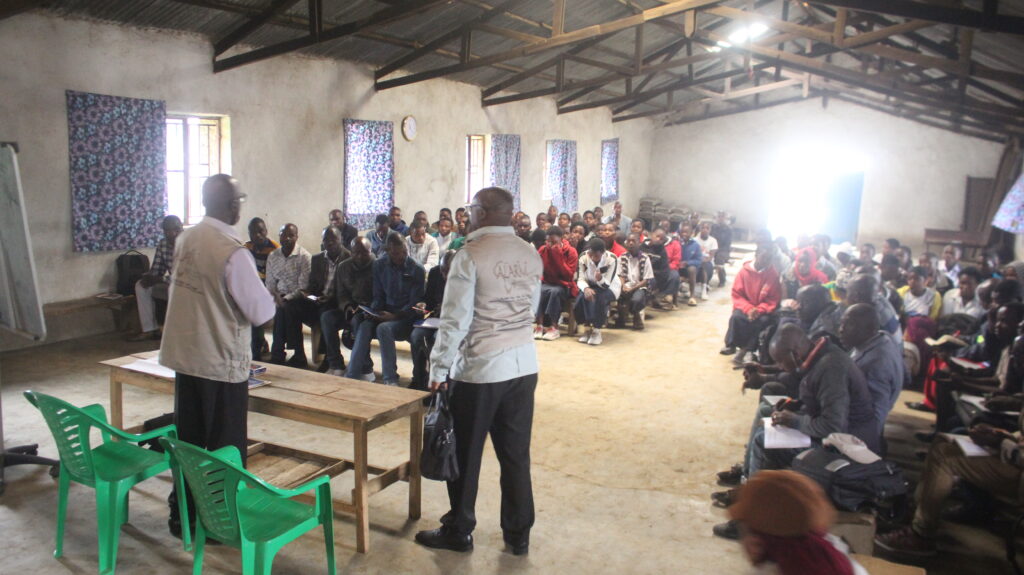
Beyond awareness sessions, ALARM–DRC provided schools and community institutions with 500-litre water tanks, soap, handwashing facilities, and educational materials, ensuring that the lessons taught could immediately be put into practice. Teachers, school brigades, and church leaders were also encouraged to oversee the maintenance of these facilities so that safe hygiene practices continue well beyond the project period.
Recognizing that health emergencies affect both physical and emotional wellbeing, the project also included Psychological First Aid Training (PFAT) for selected leaders and students. The training prepared participants to recognize distress, offer basic emotional support, reduce stigma, and refer vulnerable individuals for further assistance when needed.
To extend the reach of the intervention, Ebola prevention messages have been broadcast daily throughout September on Radio Sauti ya Faraja (Voice of Comfort), carrying life-saving information to thousands of additional households across North Kivu.
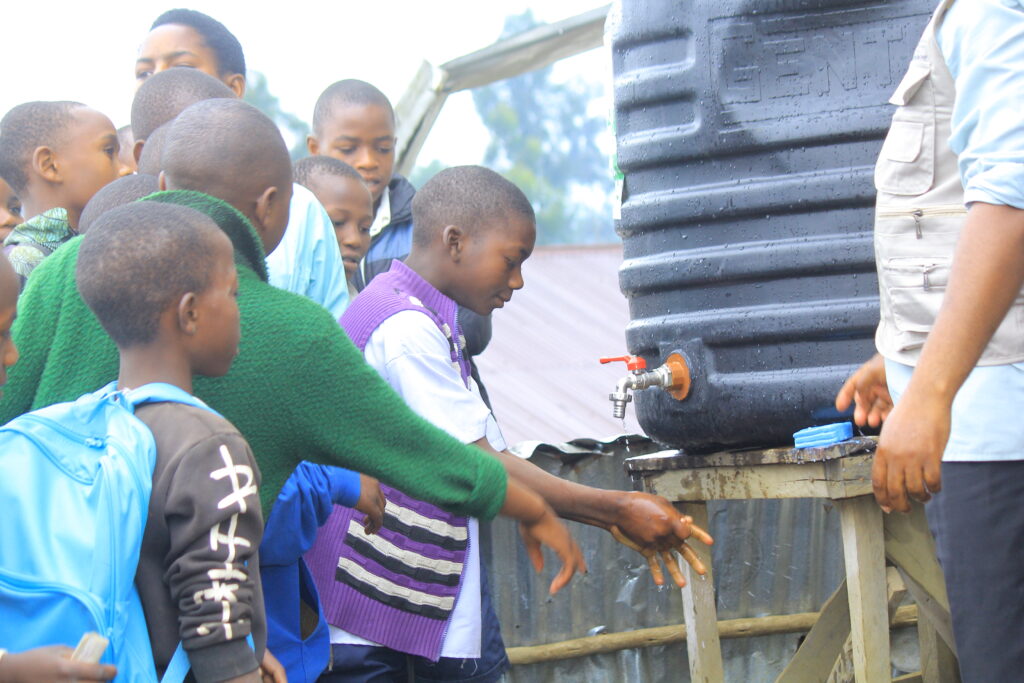
The response from the community has been encouraging. Students shared that they now understand how Ebola spreads and the importance of proper handwashing, while school and church leaders committed to passing the knowledge on to families and neighbors. The project has strengthened community preparedness by combining education with practical action—helping communities become better equipped for future health emergencies.
Although significant progress has been made, the need remains great. ALARM–DRC estimates that approximately 50 more schools in Mutaho, Muja, and Rusayo still require water tanks and hygiene facilities. Continued partnership will enable even more children, teachers, and families to access the resources they need to build healthier and more resilient communities.